Movement Studio Practice.
Solo emergence.
Movement essay.


Jan 2026.
It is at times simultaneously endearing and challenging- relfections on movements
Embracing the language of what has not yet manifest.

May 2025
Branching off from studio.
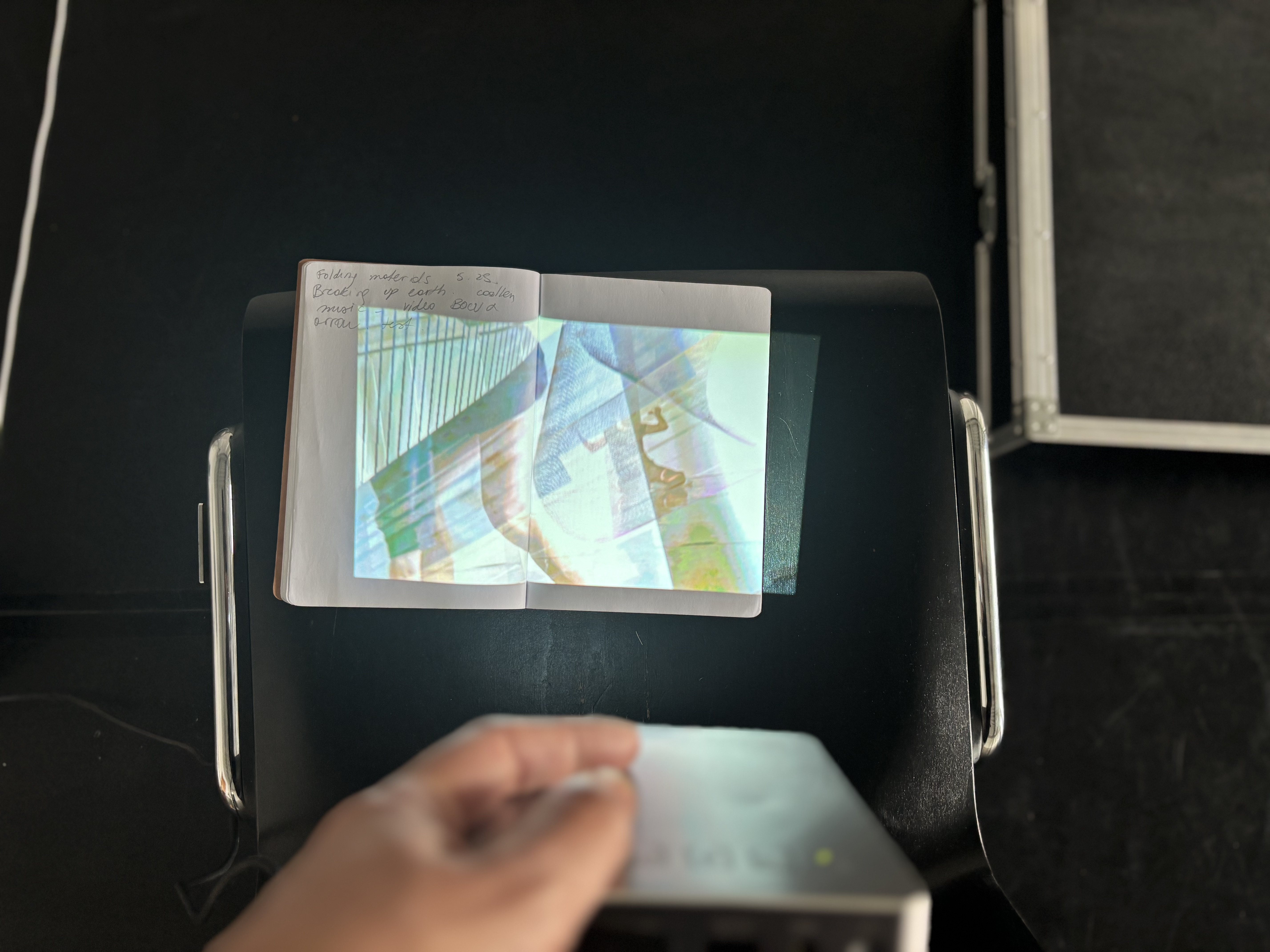
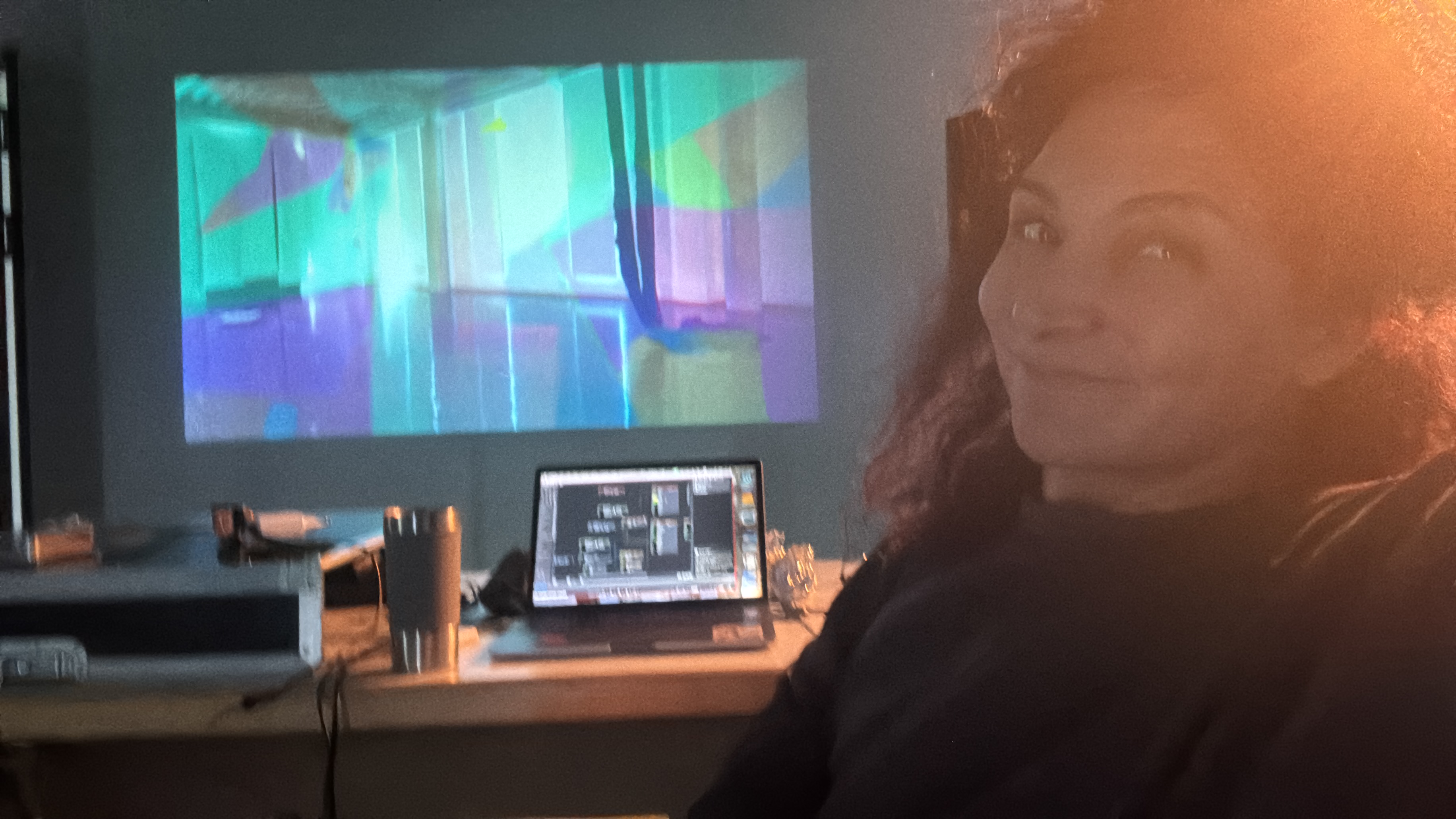
Explorations of light, body and negotiating forces of surrender.
Echoes of the displaced explores ideas about mnemonic cartography. Mapping memories not as linear or physical spaces, rather explores the personal, collective, or cultural memories shape our perceptions of geography, belonging and identity.
Experimentation in this context implies using unconventional methods, aritistic, performativem, or sensory to trace and visualise these memory landscapes.
Using analog and digital tools to create a narrative.
Essay in progress.
Südufer Freiburg.
Supported by 
Loreto Valenzuela
Tracing the poetics of movement, matter and memory.Meditations on the practice of movement.


Tracing Awareness: On Consciousness, Movement, and Artistic Research
Writing about movement is a form of inquiry: a way of noticing how gesture, language, and attention
co-produce experience. In my practice, drawing, performance, and documentation do not represent an inner idea;
they enact a field where awareness becomes tangible.
1. Movement as Inquiry
When I work, intention and contingency interlace. The line often arrives before the concept that could name it. What remains after the act—a trace of graphite, a rhythm in breath, a shift in weight—marks a meeting between perception and form. In contemporary philosophy of mind, this encounter brushes against what David Chalmers calls the “hard problem” of consciousness: the qualitative feel of experience that accompanies any cognitive event (Chalmers 1995; 1996). Artistic practice does not solve this problem; it stages it. The studio becomes an apparatus in which the invisible texture of experience leaves visible residues.
1. Movement as Inquiry
When I work, intention and contingency interlace. The line often arrives before the concept that could name it. What remains after the act—a trace of graphite, a rhythm in breath, a shift in weight—marks a meeting between perception and form. In contemporary philosophy of mind, this encounter brushes against what David Chalmers calls the “hard problem” of consciousness: the qualitative feel of experience that accompanies any cognitive event (Chalmers 1995; 1996). Artistic practice does not solve this problem; it stages it. The studio becomes an apparatus in which the invisible texture of experience leaves visible residues.
The work does not illustrate awareness; it makes a place for awareness to reveal itself.
2. The Body as Language
Phenomenology offers a vocabulary for this. For Maurice Merleau-Ponty, the body is not an object we carry but the very subject of perception—our general medium for having a world (1945/1962). Gesture is therefore thinking in action, and expression is not secondary to thought but co-originary with it. Jean-Luc Nancy radicalizes this intuition by describing the body as being-exposed (Nancy 2008): the site where existence touches, appears, and becomes shareable. My research takes place in that exposure—where material, skin, and attention negotiate meaning without necessarily arriving at a statement.
3. Awareness Between Philosophy and Buddhism
In Buddhist thought, vijñāna (consciousness) is not a substance but a continuum of knowing that arises when conditions meet; it is relational and impermanent (Rahula 1974; Thompson 2015). This aligns with the enactive view of cognition developed by Francisco Varela, Evan Thompson, and Eleanor Rosch: cognition emerges through embodied action as world and mind co-arise (Varela, Thompson & Rosch 1991). What appears as randomness in making—the misstep, the smear, the hesitation—often signals emergence rather than error: a local articulation of a wider field of awareness.
Phenomenology offers a vocabulary for this. For Maurice Merleau-Ponty, the body is not an object we carry but the very subject of perception—our general medium for having a world (1945/1962). Gesture is therefore thinking in action, and expression is not secondary to thought but co-originary with it. Jean-Luc Nancy radicalizes this intuition by describing the body as being-exposed (Nancy 2008): the site where existence touches, appears, and becomes shareable. My research takes place in that exposure—where material, skin, and attention negotiate meaning without necessarily arriving at a statement.
3. Awareness Between Philosophy and Buddhism
In Buddhist thought, vijñāna (consciousness) is not a substance but a continuum of knowing that arises when conditions meet; it is relational and impermanent (Rahula 1974; Thompson 2015). This aligns with the enactive view of cognition developed by Francisco Varela, Evan Thompson, and Eleanor Rosch: cognition emerges through embodied action as world and mind co-arise (Varela, Thompson & Rosch 1991). What appears as randomness in making—the misstep, the smear, the hesitation—often signals emergence rather than error: a local articulation of a wider field of awareness.
Enactive research: meaning is not found; it is brought forth in contact.
4. Research as Lived Method
I think of research not as extraction but as attunement. Action, observation, reflection, return: a recursive method where documentation is a second loop of awareness, allowing perception to study its own traces. This resonates with neurophenomenology (Varela 1996), which couples disciplined first-person reports with third-person investigation. In artistic terms, the artist becomes both the situated subject and the instrument of inquiry. The aim is not certainty but clarity; not closure but a reliable sensitivity to what appears.
5. Toward a Poetics of Consciousness
At the intersection of these discourses, artistic practice becomes a poetics of consciousness—an ecology where care, material, and relation compose meaning together. In moments of deep making, the distinction between self and world softens: perception is no longer about something, but with something. This is perhaps what both philosophers and contemplative traditions indicate by “consciousness”: not a property inside the head, but the event of awareness in contact. Research, then, is a practice of staying with that event—tenderly, precisely, and with enough patience for emergence to show its form.
References
- Chalmers, David J. (1995). “Facing Up to the Problem of Consciousness.” Journal of Consciousness Studies 2(3): 200–219.
- Chalmers, David J. (1996). The Conscious Mind: In Search of a Fundamental Theory. Oxford University Press.
- Merleau-Ponty, Maurice (1945/1962). Phenomenology of Perception. Routledge (trans. Colin Smith).
- Nancy, Jean-Luc (2008). Corpus. Fordham University Press (trans. Richard A. Rand).
- Rahula, Walpola (1974). What the Buddha Taught. Grove Press.
- Thompson, Evan (2015). Waking, Dreaming, Being: Self and Consciousness in Neuroscience, Meditation, and Philosophy. Columbia University Press.
- Varela, Francisco J. (1996). “Neurophenomenology: A Methodological Remedy for the Hard Problem.” Journal of Consciousness Studies 3(4): 33–79.
- Varela, Francisco J., Evan Thompson, & Eleanor Rosch (1991). The Embodied Mind: Cognitive Science and Human Experience. MIT Press
This work engages a philosophical framework informed by Alain Badiou’s notion of the event, Heidegger’s being-in-the-world, and Husserl’s phenomenological reduction.
Each image and movement is treated as a site where the conditions of appearance — perception, duration, and relation — can be examined.
In Badiou’s terms, the act of creation is a truth event that interrupts the given order, proposing new coordinates for experience.
From Heidegger’s perspective, these gestures enact a poetics of being-there (Dasein), while Husserl’s phenomenology offers a method of returning to the immediacy of perception itself.
Through this triangulation, the project investigates how artistic practice can articulate modes of existence that are both embodied and reflective — visible and concealed.
Each image and movement is treated as a site where the conditions of appearance — perception, duration, and relation — can be examined.
In Badiou’s terms, the act of creation is a truth event that interrupts the given order, proposing new coordinates for experience.
From Heidegger’s perspective, these gestures enact a poetics of being-there (Dasein), while Husserl’s phenomenology offers a method of returning to the immediacy of perception itself.
Through this triangulation, the project investigates how artistic practice can articulate modes of existence that are both embodied and reflective — visible and concealed.

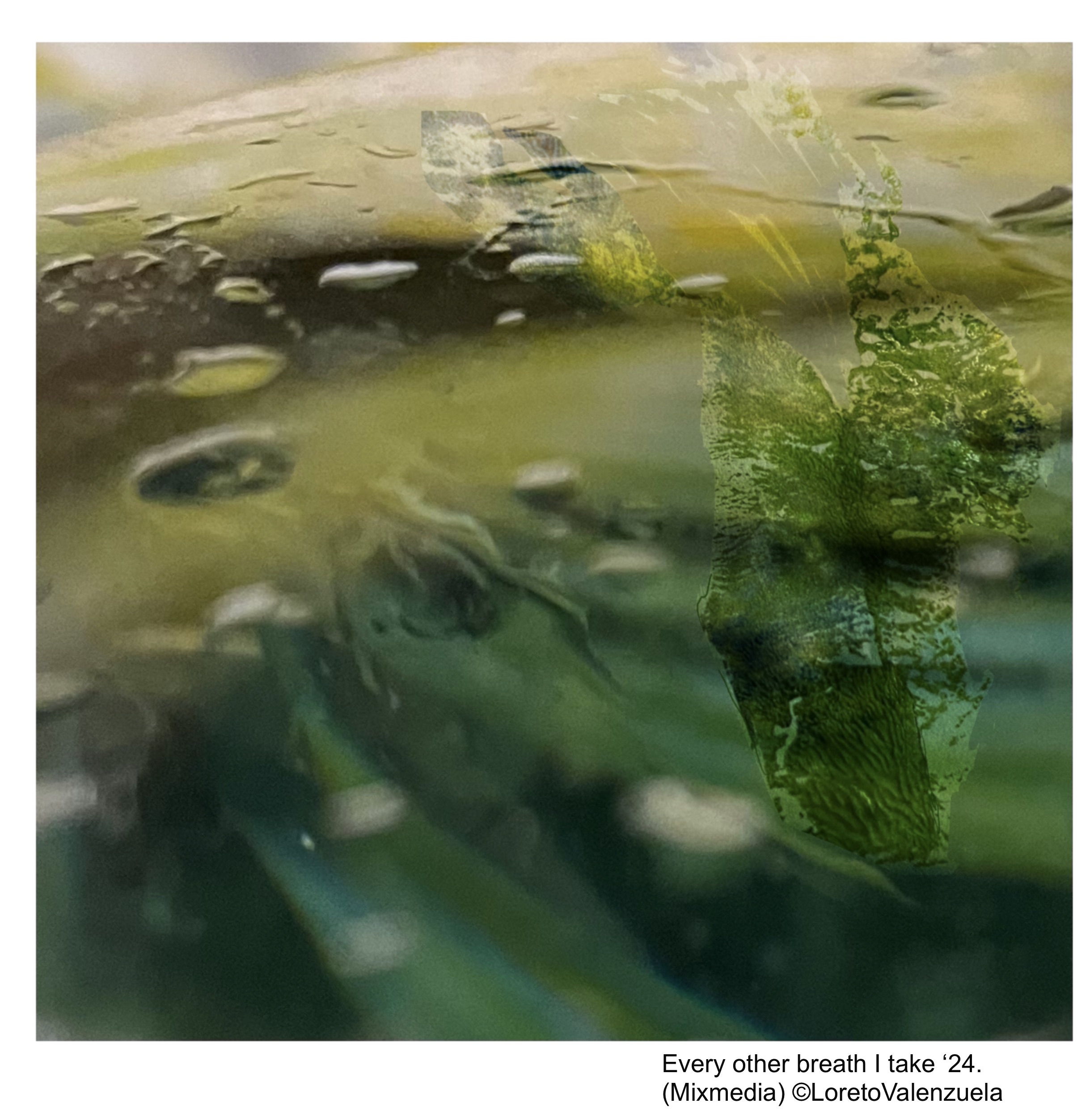
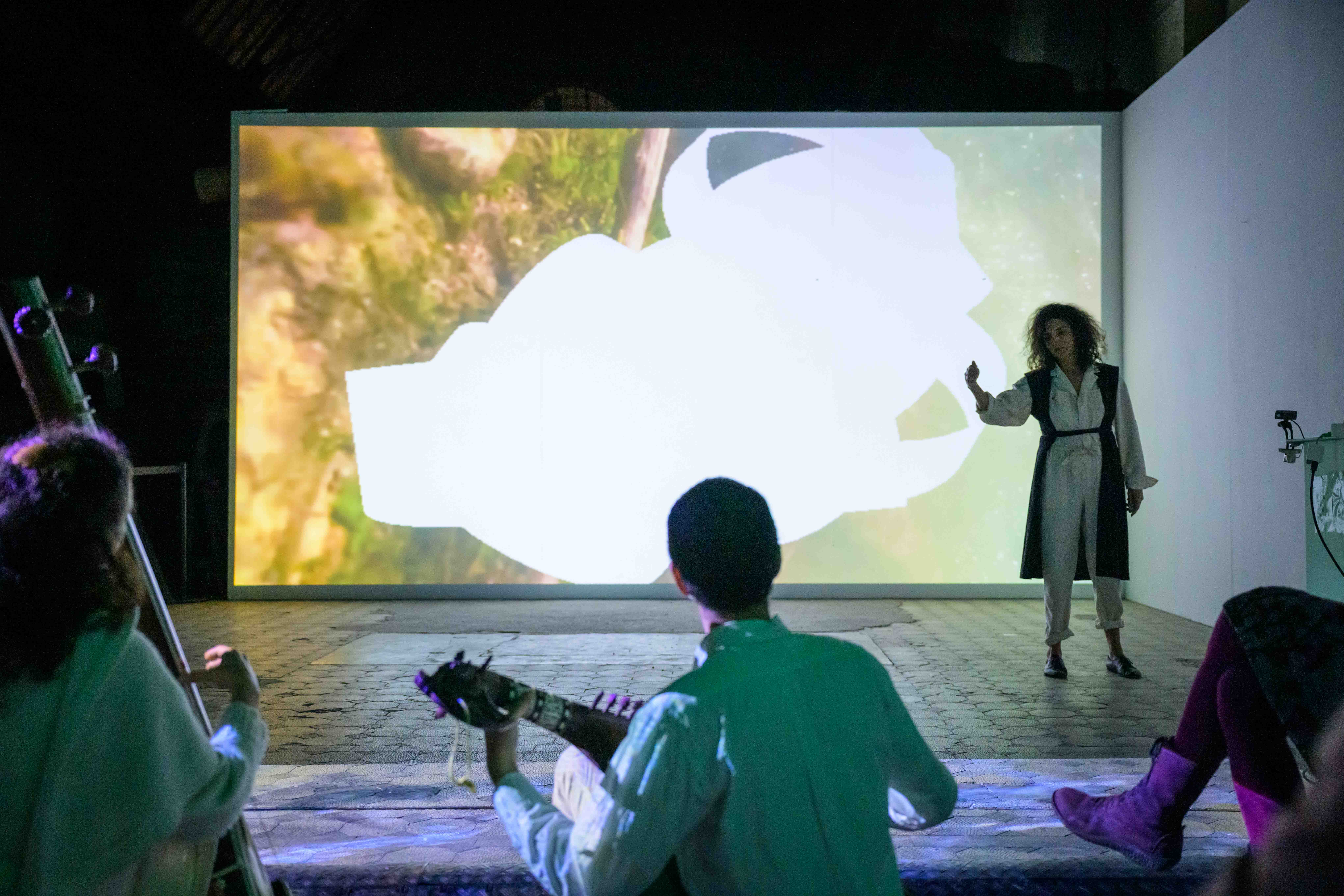
The Water that bears the boat.
Every Other Breath I Take
Performance by Loreto Valenzuela
Presented at the vernissage of The Water That Bears the Boat (solo exhibition by Steph Huang)
Galerie für Gegenwartskunst, E-Werk Freiburg — 1 February 2024
Music: Bérengère (tanpura) & Neal Koga (rubab)
This performance unfolds as an intimate response to the exhibition’s elemental theme.
Every Other Breath I Take arises from a tension between containment and release — between the body’s need for air and the water’s power to both cradle and consume.
Within the sounds of tanpura and rubab, the performer searches for breath along the surface of the water: a fragile equilibrium between surrender and endurance. The piece reflects on how power circulates through the most subtle gestures — the inhale, the exhale, the pause — and how breathing itself becomes an act of resistance within visible and invisible currents.
In dialogue with the exhibition The Water That Bears the Boat, Valenzuela’s performance investigates the paradox of support and submersion, questioning how we survive inside the very forces that hold us. Through this delicate choreography of breath, body, and sound, the artist transforms vulnerability into agency — finding strength in the act of staying afloat.
Dedicated to my late son Arian.

More information here ︎︎︎︎
AWHISPEROFTHESTONES
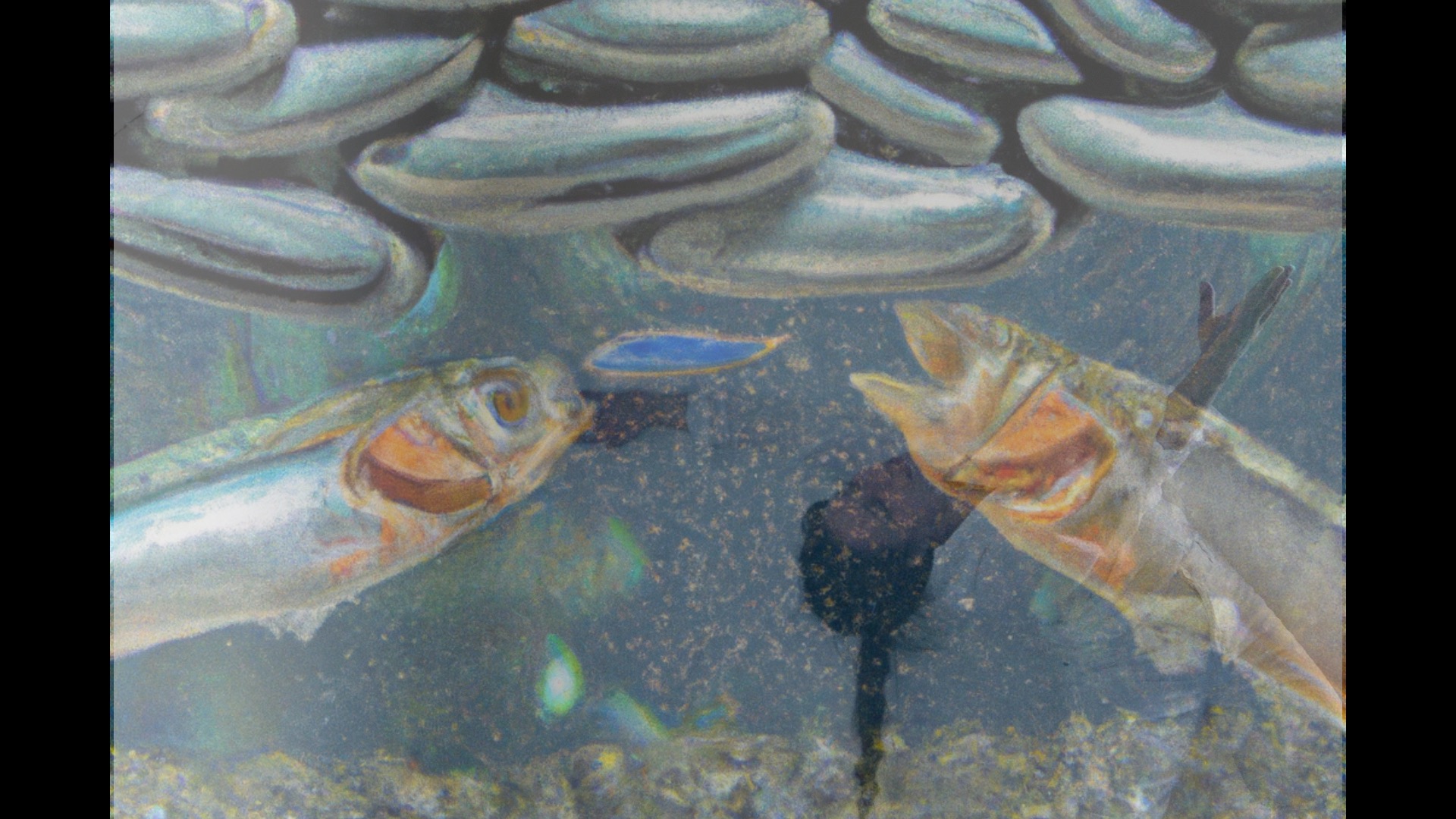
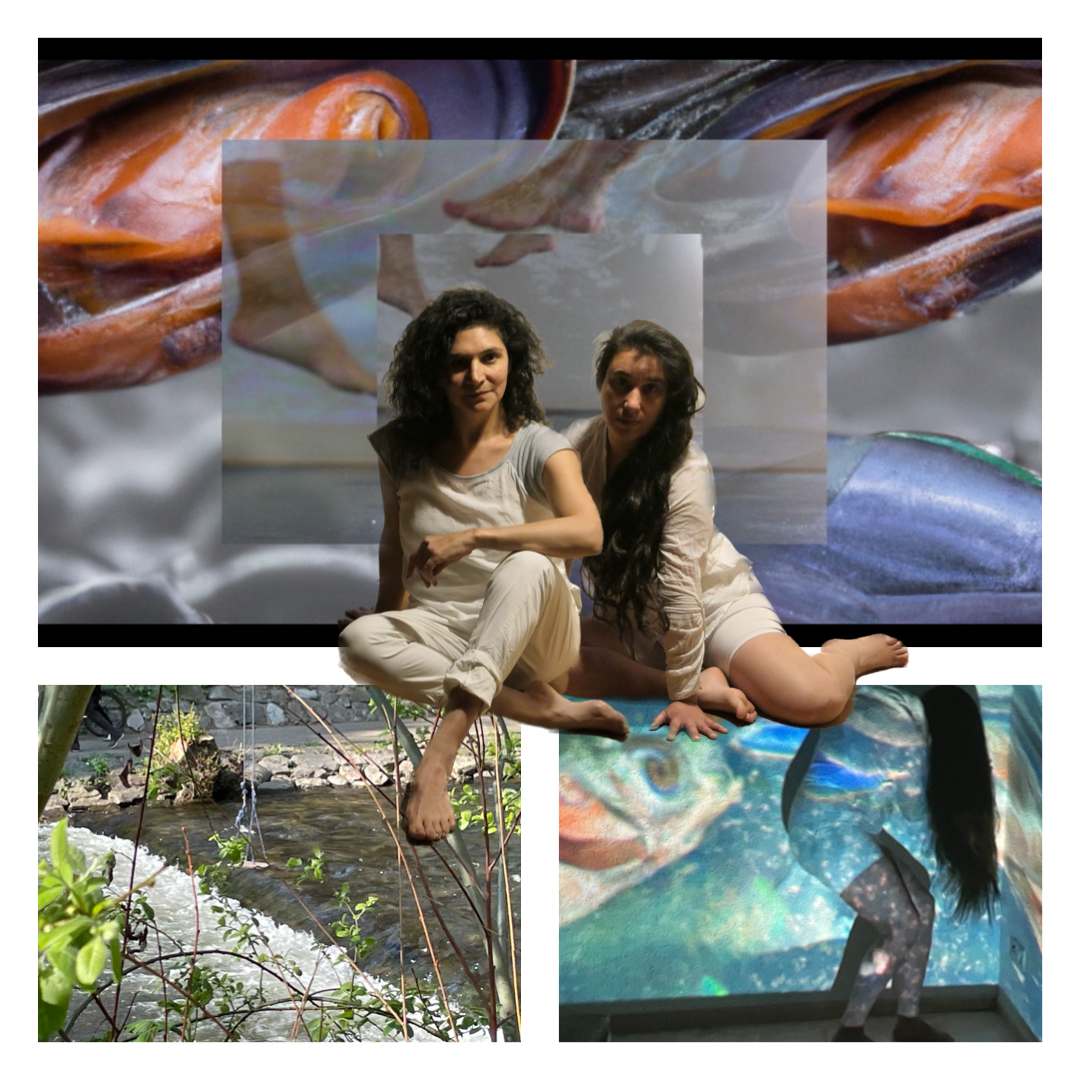
Inspired by the River Dreisam and its whispers this site specific performance invites you to refresh your perspectives.
We looked at the connection between the River and the Space. Familiar narratives to unknown and imaginative ones. What tales were there to tell? finding and offering a new perspective of the space where the old stories were understood and acknowledged, the future were imaginaries of horizontal flow of matter. Would it bring refreshing whispering perspectives?. inspiring others?
A video inst[all]action.
“Ein Silberreiher, steine, Stühle, Wasserströme, Murmelnende Rohre, das Flüstern unsichtbarer Geschichten”.
Was haben sie gemeinsam?
Credits
Concept performance Loreto Valenzuela and Andrea Lagos.
Concept visuals, performance and music, Loreto Valenzuela.
Site Specific /Performance
OFFSPACE KAISERWACHE
SCHREIBERSTRASSE
79098 Freiburg am Breisgau.


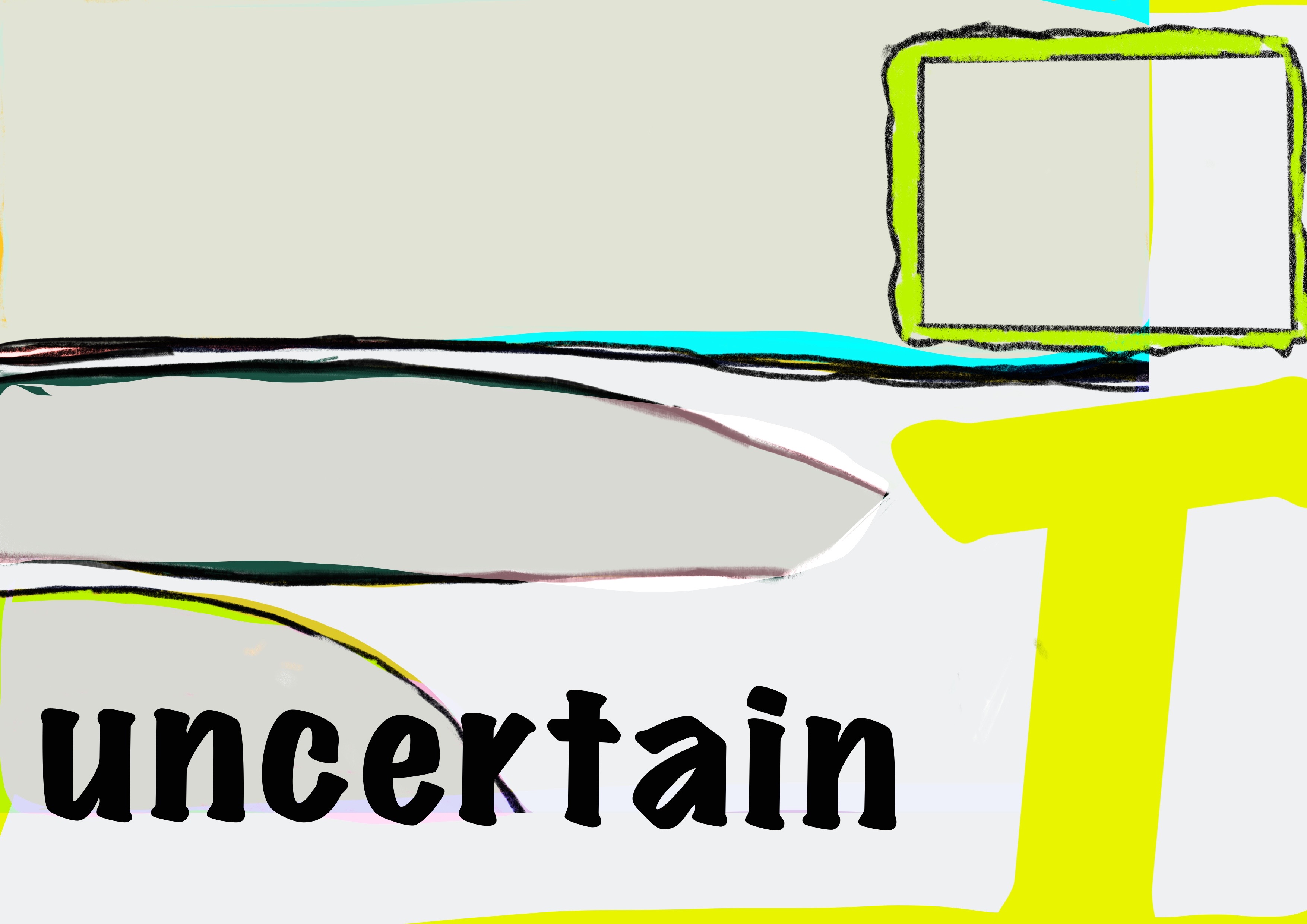
UncertainT WIP @Delphi gvbk Freiburg, Germany.
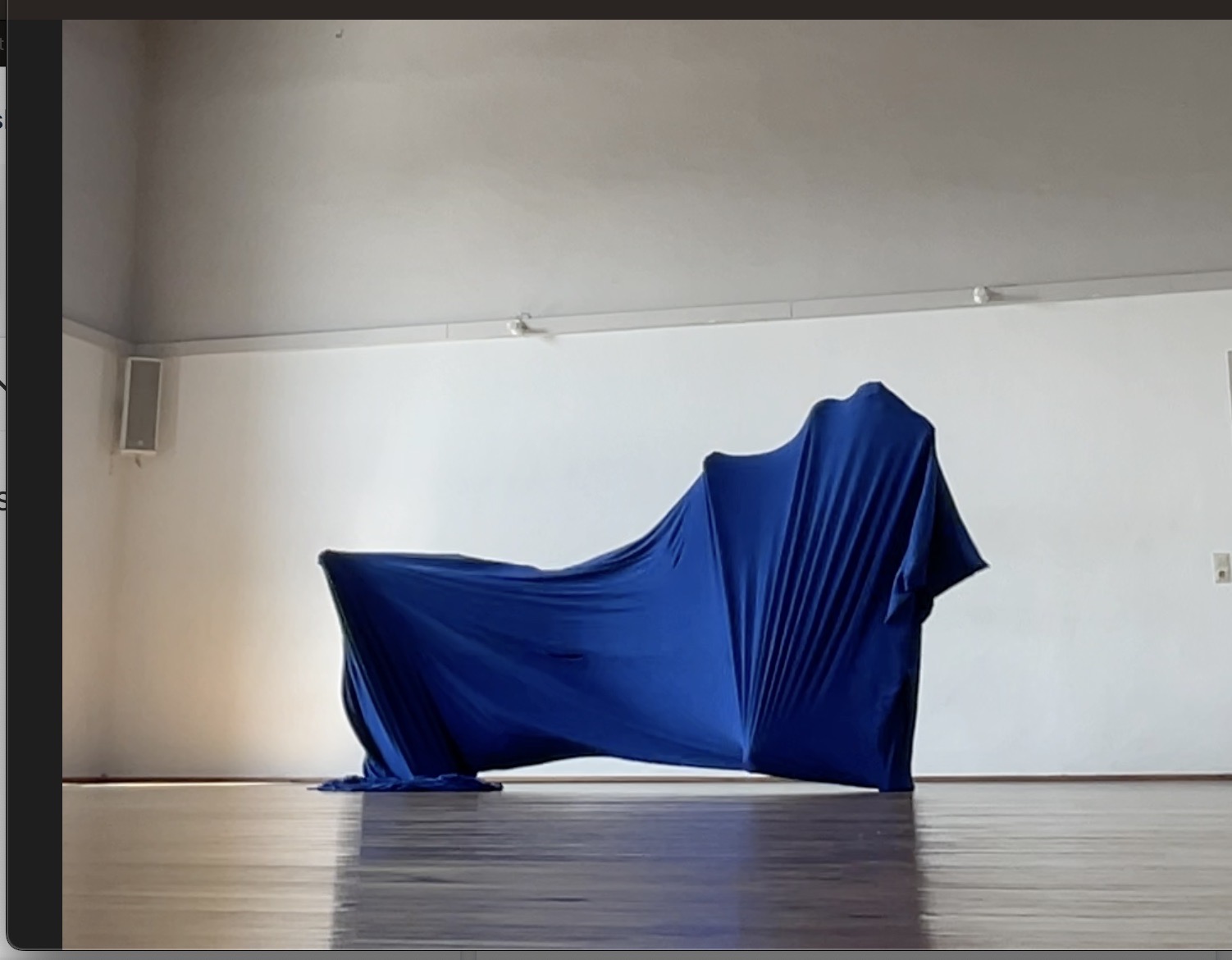
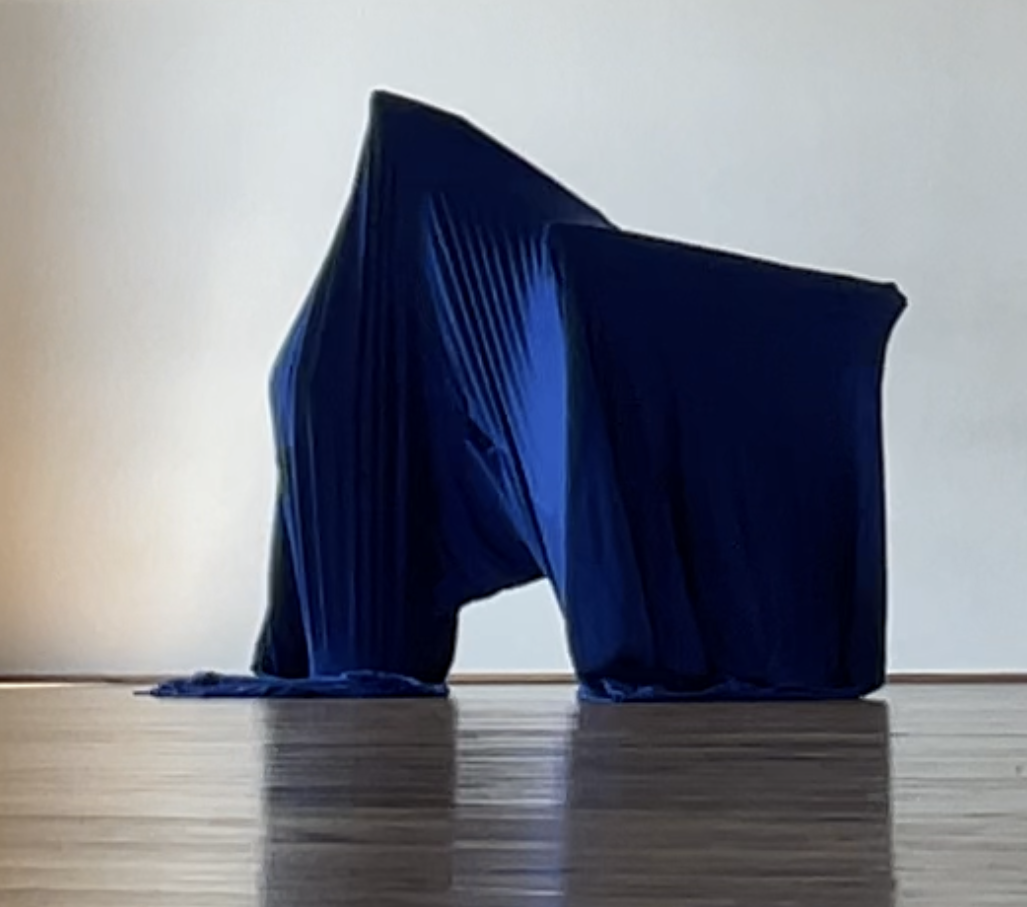



WIP backdrop
SEE work in progress CLICK HERE
Two performers learning to navigate their body, space and their co-existence with differences, novelty risks and universality. Like in walking on eggs, every step they take is a risk, the more certain they are the bigger the risks. Learning to let go and accept uncertainty is the beginning. In the work of Husserl they are “eternal beginners”
Presented at Performing Montag
Supported by
Delphi Space Freiburg &
SEE work in progress CLICK HERE
Two performers learning to navigate their body, space and their co-existence with differences, novelty risks and universality. Like in walking on eggs, every step they take is a risk, the more certain they are the bigger the risks. Learning to let go and accept uncertainty is the beginning. In the work of Husserl they are “eternal beginners”
Presented at Performing Montag
Supported by
Delphi Space Freiburg &
